
Commercial VRF Systems in Troy & Albany, NY: Cut Overhead Costs with Variable Refrigerant Flow HVAC
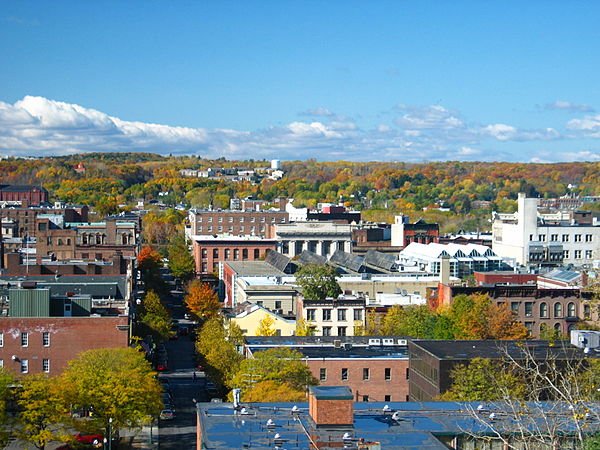
For business owners and property managers in Troy, Albany, and across New York’s Capital Region, the cost of doing business is directly tied to the cost of maintaining a comfortable indoor environment. Whether you operate a historic brick office building in downtown Troy, a multi-tenant commercial property in Albany, or a sprawling warehouse in Latham, your HVAC system is likely one of your largest ongoing overhead expenses.
Traditional rooftop units and forced-air systems were designed for a different era, and they show it on your utility bills. In 2026, forward-thinking Capital Region businesses are making a decisive switch to commercial VRF systems (Variable Refrigerant Flow HVAC) to cut energy costs, maximize building comfort, and unlock significant NYSERDA incentive dollars.
When it comes to heating solutions, many Troy and Albany businesses are discovering that their old boilers may actually be money pits—constantly requiring costly repairs and consuming excessive energy. Upgrading to energy-efficient, modern HVAC systems not only outperforms conventional boilers
What Is a Commercial VRF System? Variable Refrigerant Flow Explained
This level of control not only enhances comfort but also significantly reduces energy waste, translating into lower utility bills. By upgrading to such a system, homeowners can avoid the costly inefficiencies often associated with older boilers, turning their heating investment into a smart financial decision
However, if your old boiler lacks the advanced technology to modulate its output according to demand, it could be consuming more fuel than necessary, driving up your energy bills. Upgrading to a modern, energy-efficient model not only reduces operating costs but also
VRF vs. Traditional Commercial HVAC: Key Differences
Traditional rooftop units (RTUs): Single-zone, high energy consumption, constant cycling, require extensive ductwork, and have limited zoning capability.
Split systems: Better zoning than RTUs but typically limited to smaller areas; multiple compressors required for whole-building coverage.
Commercial VRF systems: One outdoor unit serves an entire building or floor with independent zone control, inverter-driven compressor runs at variable speeds, minimal refrigerant piping replaces bulky ducts.
However, before committing to such extensive upgrades, it's crucial to assess whether your existing boiler is truly draining your finances through inefficiency and frequent repairs. Many older boilers, if properly maintained or selectively updated, can still offer a reliable and cost-effective heating source.
Precision Zoning: Heat or Cool Only What You Actually Use
One of the most immediately impactful features of commercial VRF systems is granular zoning control. Traditional commercial HVAC systems operate in an “all or nothing” fashion; if one part of the building needs conditioning, the entire system kicks on and conditions everything.
With a VRF system installed by The Radiant Store, each indoor unit operates independently. Consider what this means for a typical Capital Region commercial property:
Your server room can maintain a steady 68°F cooling demand 24/7 without overworking the rest of the system.
Perimeter offices that lose heat to exterior walls in January can receive extra warmth while interior conference rooms stay cooler.
Unoccupied storage rooms, hallways, and utility spaces receive no conditioning at all, wasting zero energy.
A restaurant kitchen that generates significant heat can receive active cooling while the dining area receives heat simultaneously from the same outdoor unit.
This simultaneous heating and cooling capability available in heat recovery VRF configurations is one of the most powerful energy-saving features in commercial HVAC today. It recaptures waste heat from areas that need cooling and redirects it to areas that need heating, rather than exhausting it outside.
For a detailed assessment of how VRF zoning could work in your specific Troy or Albany property, contact The Radiant Store’s commercial HVAC team for a no-obligation consultation.
Energy Savings of 30–40% Compared to Conventional HVAC Systems
The financial case for commercial VRF installation in Troy and Albany is compelling. Because VRF systems use inverter-driven, variable-speed compressors, they never waste energy running at full capacity when partial capacity is all that’s needed.
According to research from YORK Commercial HVAC, VRF systems deliver energy savings of 30–40% compared to conventional commercial HVAC systems. For a Capital Region business spending $30,000 annually on HVAC energy costs, that translates to $9,000–$12,000 in annual savings every single year after installation.
Why VRF Systems Use Less Energy
No duct losses: Traditional ducted systems lose 20–30% of conditioned air through duct leakage and heat transfer. VRF refrigerant lines lose virtually nothing in transit.
Variable-speed operation: The compressor ramps up and down continuously rather than hard-starting at full power, eliminating the enormous energy spikes of traditional cycling systems.
Heat recovery: In heat recovery VRF configurations, waste heat from cooling zones is actively redirected to heating zones, achieving system efficiencies that exceed 100% COP (Coefficient of Performance).
Part-load efficiency: Buildings rarely operate at peak load. VRF systems are specifically engineered to be most efficient at partial loads, which is how commercial buildings operate the vast majority of the time.
In the variable Upstate New York climate, where businesses need meaningful heating from October through April and cooling from June through September, a system that handles both with maximum efficiency represents a major competitive financial advantage.
Space-Saving Design Ideal for Troy & Albany’s Historic Architecture
Space is at a premium throughout Troy’s celebrated historic commercial district and Albany’s older office stock. Massive sheet-metal ductwork is frequently difficult to install, prohibitively expensive to route through historic structures, or simply architecturally impossible without destroying the building’s character.
Commercial VRF systems elegantly solve this problem. The refrigerant piping used in VRF installations has a small diameter, often 1–2 inches, and can be routed through walls, above drop ceilings, and around structural elements with minimal disruption. This makes VRF technology the preferred solution for:
Historic brick commercial buildings throughout downtown Troy and the Collar City district
Older office buildings in Albany’s Center Square and Washington Park neighborhoods
Multi-tenant commercial spaces where individual tenant buildouts require independent HVAC control
Renovated industrial and warehouse spaces in Watervliet, Cohoes, and Green Island
Medical offices, clinics, and professional spaces requiring quiet, unobtrusive HVAC equipment.
The indoor units themselves are available in multiple form factors: ceiling cassettes, wall-mounted units, concealed ducted units, and floor consoles, so they integrate cleanly into virtually any commercial interior design without compromising aesthetics.
The Radiant Store’s commercial HVAC specialists have extensive experience working within the constraints of historic Capital Region buildings, designing VRF systems that deliver modern performance without disrupting architectural integrity.
NYSERDA Rebates & Federal Incentives for Commercial VRF Installation in New York
New York State has some of the most aggressive building electrification incentive programs in the country, and commercial VRF systems are squarely in the crosshairs of that funding.
As of 2026, Capital Region businesses installing qualifying high-efficiency VRF systems can access financial incentives through multiple programs:
NYS Clean Heat Program (NYSERDA): The NYS Clean Heat Program provides per-ton incentives for commercial heat pump installations, including VRF systems. Incentive amounts vary by equipment type and business category.
National Grid Commercial Energy Efficiency Program: National Grid offers custom incentives for commercial customers who install qualifying high-efficiency HVAC equipment, often calculated on projected energy savings.
Federal Investment Tax Credit (ITC) / Inflation Reduction Act provisions: Commercial properties may qualify for federal tax incentives for energy-efficient building upgrades. Consult your tax advisor for current eligibility.
Consolidated Edison programs: Businesses in Con Ed's service territory also have access to demand response and efficiency incentive programs for qualifying HVAC upgrades.
Navigating these incentive structures is complex; each program has specific equipment requirements, application windows, and documentation standards. The Radiant Store manages the entire incentive application process on behalf of our commercial clients, ensuring you capture every available dollar and achieve the fastest possible return on investment.
In many cases, when NYSERDA rebates and energy savings are combined, Troy and Albany businesses find that a commercial VRF system reaches full financial payback in three to five years after which the energy savings represent pure profit.
Longer Equipment Lifespan & Fewer Emergency Repairs
Every facilities manager knows the real cost of commercial HVAC isn’t just energy, it’s the emergency service calls, the unplanned downtime, and the deferred capital replacement costs that compound over time.
Because commercial VRF systems are designed to operate predominantly at partial load, never “hard starting” at full power, the internal components experience dramatically less mechanical stress than in conventional systems that constantly cycle on and off at maximum capacity. The practical results:
Fewer compressor failures: Inverter compressors that modulate speed have significantly longer service lives than fixed-speed compressors that start and stop repeatedly.
Reduced refrigerant stress: Gradual pressure changes versus sudden cycling minimize refrigerant leak risk and reduce stress on fittings and components.
Less wear on indoor units: Fan motors and heat exchangers operating at variable, lower speeds last longer than those in constant full-speed operation.
Proactive diagnostics: Modern VRF systems include built-in diagnostic capabilities that alert technicians to developing issues before they become emergency failures—reducing costly after-hours service calls.
Typical commercial VRF systems are engineered for 15–20+ year service lives with proper maintenance significantly longer than the 10–15 year average of many conventional commercial rooftop units operating in Upstate New York’s demanding climate.
Improved Indoor Air Quality & Employee Comfort for Capital Region Businesses
Beyond energy costs, commercial HVAC directly affects employee productivity, tenant satisfaction, and the indoor environment your team spends 40+ hours per week in. VRF systems deliver measurable comfort advantages over traditional systems:
Whisper-quiet operation: VRF indoor units operate at noise levels as low as 22 dB—quieter than a library compared to the constant cycling hum of older rooftop units. This directly benefits indoor air quality and workplace acoustics.
No duct contamination: Aging ductwork accumulates dust, mold, and allergens over time. VRF’s ductless or minimal-duct design eliminates this pathway for indoor air quality degradation.
Precise humidity control: Variable-speed operation maintains more consistent temperatures and humidity levels than cycling systems, reducing condensation and mold risk in commercial spaces.
Individual comfort control: Per-zone thermostat control eliminates “one-size-fits-all” temperature settings that leave some employees too hot and others too cold.
Studies consistently show that thermal comfort is one of the top factors affecting employee productivity and satisfaction in commercial environments. Investing in a VRF system is simultaneously an investment in your team’s performance.
Which Commercial Properties in Troy & Albany Benefit Most from VRF?
While virtually any commercial building can benefit from VRF technology, The Radiant Store has found that it delivers the highest ROI for specific property types common throughout the Capital Region:
Multi-tenant office buildings: Allows each tenant to control their own HVAC independently, making energy sub-metering straightforward and tenant satisfaction significantly higher.
Historic commercial buildings: Troy and Albany’s wealth of 19th and early 20th-century commercial architecture is ideally served by VRF’s minimal infrastructure footprint.
Medical and professional offices: Quiet operation, precise temperature control, and independent zoning make VRF ideal for healthcare facilities, dental practices, and professional service firms.
Restaurants and hospitality: Simultaneous heating and cooling capability handles dramatically different thermal demands of kitchens and dining rooms from a single outdoor unit.
Retail spaces and showrooms: Clean aesthetics, quiet operation, and energy efficiency align with customer-facing retail environments throughout Troy’s growing commercial districts.
Educational facilities and nonprofits: NYSERDA’s rebate programs often have enhanced tiers for qualifying nonprofit and educational organizations.
Why Choose The Radiant Store for Commercial VRF Installation in Troy & Albany?
Transitioning a commercial building to VRF is a sophisticated engineering project. It requires precise load calculations, careful equipment selection, expert refrigerant system design, and deep familiarity with local building codes and utility incentive programs. This is not a job for a generalist contractor.
The Radiant Store brings over 20 years of specialized experience designing and installing commercial HVAC solutions tailored to the unique climate conditions, architectural constraints, and utility infrastructure of the Hudson Valley and Capital Region.
Our commercial VRF installation process includes:
Comprehensive building assessment and load calculation specific to your property
VRF system design optimized for your building layout, occupancy patterns, and budget
Equipment specification from leading manufacturers with proven performance in Upstate New York climates
Full NYSERDA and utility rebate application management on your behalf
Professional installation by certified commercial HVAC technicians
Commissioning, testing, and staff training on the new system controls
Ongoing commercial maintenance agreements to protect your investment
We also specialize in electric HVAC solutions and full building electrification planning, helping Capital Region businesses build a roadmap toward lower carbon emissions and reduced dependence on fossil fuels.
Frequently Asked Questions: Commercial VRF Systems in Troy & Albany, NY
How much does a commercial VRF system cost in Troy, NY?
Commercial VRF system costs vary considerably based on building size, number of zones, equipment tier, and installation complexity. As a general benchmark, commercial VRF installations typically range from $15,000 to $60,000 or more for mid-size commercial properties. However, NYSERDA rebates, National Grid incentives, and annual energy savings of 30–40% can dramatically shorten the payback period. The Radiant Store provides detailed cost and ROI projections as part of every commercial consultation.
Can VRF systems work in older Troy and Albany commercial buildings?
Yes—in fact, older buildings are often the ideal candidates for VRF. Because VRF uses small-diameter refrigerant piping rather than large ductwork, it can be installed in historic commercial buildings with minimal structural disruption. The Radiant Store has extensive experience retrofitting VRF into Troy’s 19th and early 20th-century commercial stock.
What NYSERDA rebates are available for commercial VRF in New York?
The NYS Clean Heat Program offers per-ton incentives for qualifying commercial heat pump (VRF) installations. Exact amounts depend on equipment type, building category, and current program funding levels. National Grid also offers custom commercial efficiency incentives. The Radiant Store manages the complete rebate application process for our commercial clients.
How long does a commercial VRF installation take?
Installation timelines depend on building size and system complexity. A single-floor commercial VRF installation often takes 3–5 days. Multi-floor or large-building projects may take 1–3 weeks. The Radiant Store develops a detailed project schedule before work begins to minimize disruption to your business operations.
What is the difference between VRF heat pump and VRF heat recovery systems?
A VRF heat pump system provides heating OR cooling to all zones simultaneously (they all operate in the same mode at a given time). A VRF heat recovery system can provide simultaneous heating to some zones and cooling to others, and recaptures waste heat from cooling zones to assist heating zones. Heat recovery VRF is generally the higher-efficiency choice for mixed-use commercial buildings with diverse zone demands, such as buildings with server rooms, restaurant kitchens, or sun-exposed south-facing offices alongside shaded north-facing spaces.
Does The Radiant Store service VRF systems after installation?
Yes. The Radiant Store offers comprehensive commercial HVAC maintenance agreements for VRF systems we install, as well as service for existing VRF systems installed by other contractors. Regular preventive maintenance is key to protecting your VRF investment and maintaining manufacturer warranty coverage.
Ready to Reduce Your Commercial Overhead with VRF? Let’s Talk.
Don’t let an outdated, inefficient HVAC system continue eating into your operating budget season after season. Commercial VRF technology is proven, available now, and—with current NYSERDA incentive programs—has never been more affordable for Capital Region businesses.
The Radiant Store serves commercial clients throughout Troy, Albany, Watervliet, Cohoes, Latham, Schenectady, and the entire Capital Region and Hudson Valley.
Cut commercial HVAC energy costs 30–40%
Achieve room-by-room comfort control throughout your building
Qualify for NYSERDA rebates and National Grid incentives
Eliminate disruptive ductwork in historic commercial properties
Extend equipment lifespan and reduce emergency repair costs
Request a Commercial VRF Consultation Today or call our Troy office directly at (518) 500-3131 to speak with a commercial HVAC project manager.